



Single- or double-sided fabric wall: which should you choose for a trade show?

Single- or double-sided fabric wall? The choice depends mainly on where the system will stand. If the structure sits at the back edge of the stand, the second graphic will often stay unseen. When the wall is meant to divide the space or be viewed from several aisles, printing on both sides can make it far more useful.
Don't decide based only on how the product looks in the catalogue. Analyse the hall plan, the direction of visitor traffic and future events where you'll use the system.
What's the difference between a single- and double-sided wall?
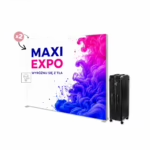
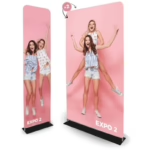
A fabric wall consists of a frame and a matching fabric graphic. How the material is fixed depends on the chosen system. In some models the graphic is a pull-on cover, in others it is fixed in the profile.
The single-sided variant has a graphic on one side only. It is mainly placed against a wall, at the edge of the stand or behind a counter. How the back is finished depends on the specific model, so check before ordering how the side facing the back room will look.
The double-sided variant has a graphic on both sides of the frame. These can be two identical graphics or two different designs. That way one side can draw attention from the aisle while the other gives information to people already on the stand.
Single- or double-sided fabric wall: a quick comparison
| Criterion | Single-sided variant | Double-sided variant |
|---|---|---|
| Best placement | Against a wall, behind a counter, at the back edge of the stand | On an island, in open space, between zones |
| Message visibility | From one main direction | From two opposite directions |
| Graphic design | One communication surface | Two identical or different surfaces |
| Range of uses | Fixed, predictable placements | Changing stand layouts and events |
| Preparation cost | Usually lower due to less printing | Usually higher, as it includes graphics on two sides |
| Content planning | Simpler | Requires deciding the role of each side |
This comparison shows the general rule. The final print scope, finish and graphic change options must be confirmed for the specific system.
When is a single-sided fabric wall enough?
The stand has a closed back
If the wall stands right against the back wall of the stand, visitors will only see its front. Printing a second graphic won't then increase brand visibility. It's better to spend the budget on a larger format, display lighting or an extra display at the entrance.
The system will be a backdrop for conversations and presentations
A single-sided graphic works well behind a counter, a consultation table or a presentation area. It can include the logo, a short slogan and a visual recognisable from further away in the hall. This layout is clear and doesn't require designing a second surface.
The same rule applies outside trade shows. If you plan to use a fabric wall for an office, showroom or point of sale and place it against a wall, the single-sided variant usually suits that use.
You have limited transport space
When you travel often, the number of items you have to pack and carry matters. The difference depends on the structure, but a single graphic means less material to fold, check and store. This is practical when one or two people run the stand.
When should you choose a double-sided fabric wall?
The stand is open on several sides
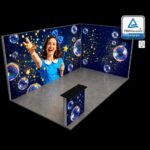
On a corner, peninsula or island stand, traffic comes from more than one direction. A double-sided wall can then act as the central point of the display. The logo and main message stay visible both to people coming from one aisle and to those on the other side.
The wall divides the space into zones
A structure placed in the middle of the stand can separate the consultation area from the presentation area or the back room from the guest area. Put the main advertising message on the outer side. On the inside you can place offer information, instructions, the event programme or a calmer backdrop for conversations.
The stand layout changes between events
One time you may get a space against a wall, another time a stand open on two sides. The double-sided variant gives you more freedom of placement. It is especially useful for marketing teams that handle several events a year and don't know every hall plan well in advance.
The system is meant to be a photo backdrop
If guests take photos on both sides of the structure, or the wall stands in the centre of a conference, two graphics make better use of the available surface. But remember the surroundings. Cables, the back room and random objects visible behind the wall can lower photo quality regardless of the print itself.
Check the stand plan first
The floor plan matters more than a photo of the wall. Mark the entrances, neighbouring stands, closed edges and main aisles. Then answer four questions:
- From how many directions will visitors see the structure?
- Will there be space accessible to guests behind the wall?
- Should the system only present the brand, or also divide the stand?
- Will you use the same product later in a different layout?
If the back will always be hidden, choose the single-sided version. If at least two viewing directions matter, consider the double-sided version.
How do you plan graphics for both sides?
Both sides don't need the same design. Each side can have a different job. The front facing the aisle should work from a greater distance. Put the logo, one short slogan and a clear visual on it. The side facing the inside of the stand can carry more detailed information, as it is viewed up close.
Avoid a wall of text. At trade shows visitors often move between stands and have only a moment to read the message. Place contact details and the QR code at a height where they won't be hidden by a counter, a chair or the person talking.
Maxi Expo customers supply their own print-ready graphic design. So before sending files, the format, visible area and graphic preparation requirements for the chosen system must be agreed.
Is the double-sided variant always better value?
No. The extra surface only makes sense if someone sees it or you use it at future events. If the back faces a wall or a closed back room, the extra printing brings no practical benefit.
When comparing solutions, consider the whole set: structure, graphics, transport, storage and the planned number of uses. Don't judge the choice on a single event if the system will later work in a showroom, at a conference or at a point of sale.
How do you complement the wall on a stand?
The wall alone creates a backdrop but doesn't organise how you serve guests. At the entrance you can place a Modulate™ rectangular counter, which creates a place for conversations and materials. If the display needs extra light, see the LED light set for trade show systems. The choice of lighting should take into account the structure, hall conditions and graphic layout.
If you need an adjustable backdrop instead of a fixed-format fabric system, an alternative could be the Pegasus 300 × 240 cm telescopic wall. Flags, on the other hand, can mark the entrance to an event or the area in front of a company's premises. A separate guide explains how to choose an advertising flag for the location and how it will be used.
The most common mistakes when choosing a wall
- Ordering two graphics without analysing the placement. The back may stay unseen for the whole event.
- Choosing one side purely for budget reasons. On an open stand a blank or technical back may face an important aisle.
- No plan for future uses. A wall bought for one trade show often ends up at conferences and presentations later.
- An overloaded graphic. A large surface doesn't mean you have to fill it with a description of your whole offer.
- Ignoring the equipment in front of the wall. A counter or monitor can hide an important part of the design.
How does an order work at Maxi Expo?
For 12 years Maxi Expo has supplied display, exhibition and advertising systems across Poland. The range includes fabric walls, roll-ups, LED systems, modular stands, counters, flags, stands and accessories.
Once the system is chosen, the customer sends a print-ready graphic design. Maxi Expo handles product preparation, large-format printing and transport. Long-standing cooperation with large-format print houses allows lead times of 2–5 working days. The exact date depends on the chosen solution, the correctness of the files and current arrangements.
FAQ: single- or double-sided fabric wall
Can each side of the wall have a different graphic?
Yes, if the chosen system allows double-sided display. One side can advertise the brand towards the aisle, while the other supports conversations inside the stand. The file preparation scope should be confirmed before printing.
Is a single-sided wall suitable for a corner stand?
Yes, provided it is placed with its back to a closed edge of the stand. If its back will be visible from the second aisle, the double-sided version may be a better choice.
Can the graphic alone be replaced later?
In many fabric systems the graphic is replaceable, but how it's replaced depends on the structure. Check this before buying, especially if you plan seasonal campaigns or events for different industries.
Is the double-sided variant harder to assemble?
That depends on the specific model and how the fabric is fixed. A second print alone doesn't determine how difficult assembly is. Before choosing, ask about assembly, the number of parts and how the system is packed.
Which variant should you choose for a conference?
For a stage backdrop placed against a wall, the single-sided variant is usually enough. A double-sided wall is useful in a foyer, in the middle of a room or as a divider between the registration area and the networking area.
Summary
A single-sided wall works mainly as a backdrop against a wall, behind a counter or at a closed edge of the stand. Choose the double-sided variant when the structure will be visible from opposite directions, divide the space or work in changing layouts.
Have a stand plan but not sure which option is more practical? Contact Maxi Expo. Based on the type of event, the space available, the planned placement and your budget, we'll help you choose a wall and matching display system elements.