


Advertising lightbox: how does it work and where does it work best?
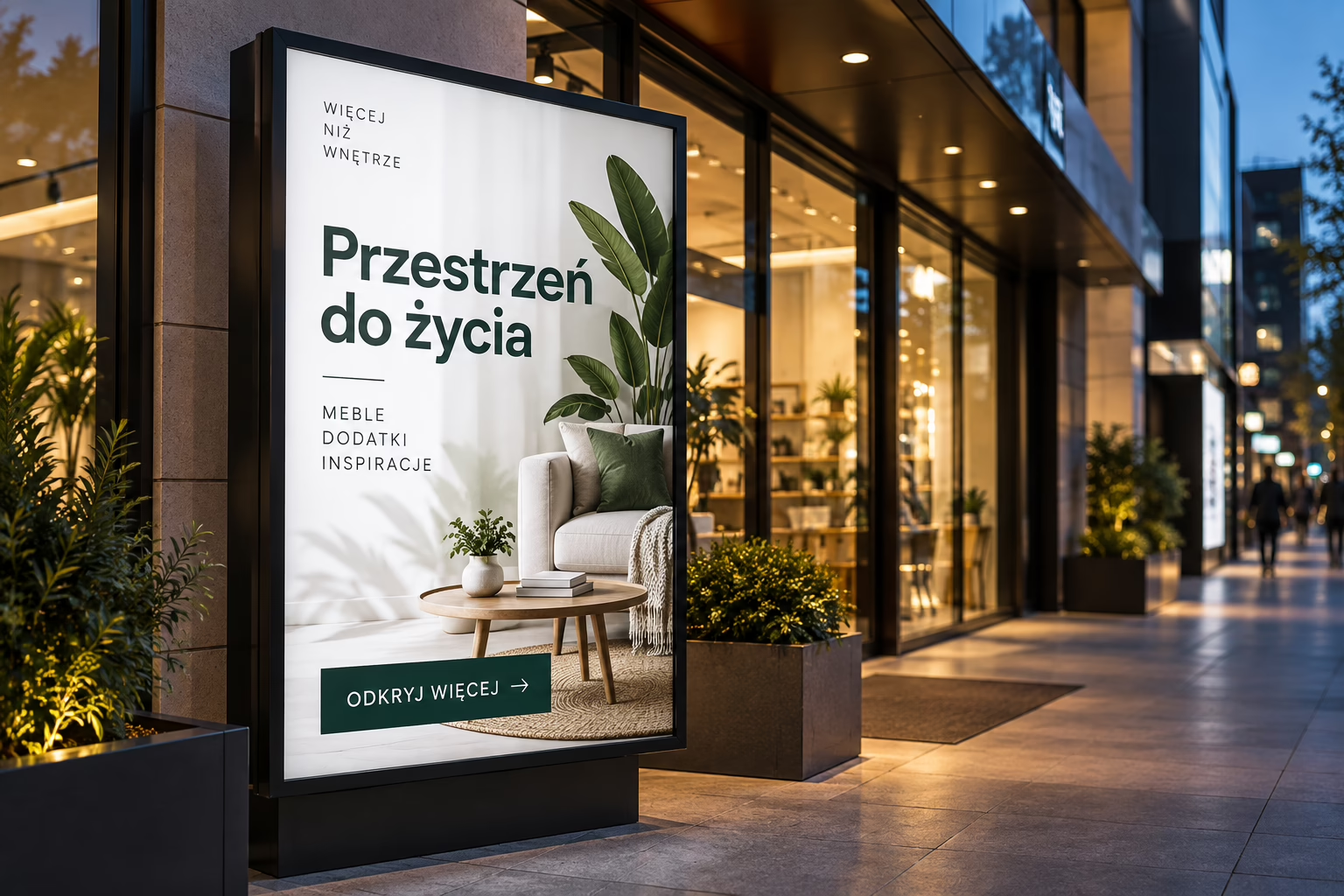
An advertising lightbox is a backlit display system that combines a frame, LED lighting and a replaceable graphic. You can use it as a stand backdrop, a free-standing wall, part of a build or a message display in a showroom. Backlighting makes the design more legible and helps keep it visible even in a hall with uneven lighting.
We explain how such a system works, where it delivers most and how to match it to the event, the space available and how it will be transported.
What is an advertising lightbox?
An advertising lightbox, also called an LED wall or fabric light box, is a structure with an internal light source. A print prepared for backlighting is fitted on its surface. When the power is connected, light spreads behind the graphic so colours and content stay clearly visible.
Mobile lightboxes used at trade shows differ from permanent light boxes mounted on building facades. They are designed for transport, repeated folding and graphic changes. The structure can serve as a single display or become part of a larger stand.
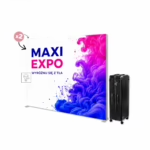
A good example of a solution for different spaces is the LED BOX™ 2.0 with print. The system can present advertising at trade shows, conferences, events, in showrooms and at points of sale.
How does an advertising lightbox work?
A lightbox consists of several elements that work together. The aluminium frame holds everything together and gives it its shape. LED lighting inside the system backlights the display surface. A suitably prepared printed fabric diffuses the light and presents the brand message.
Frame and lighting
The profiles form a frame that holds the lighting elements. Their layout affects the look of the finished display. The aim is even backlighting without noticeably darker areas.
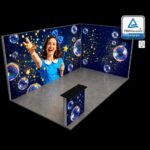
In modular systems individual elements can be combined into larger layouts. This lets you build a simple backdrop, a corner or an extensive build matched to the stand area. An example is the LUNIX™ PRO illuminated LED trade show system, designed for creating backdrops and display builds.
Fabric graphic
Many lightboxes use a graphic edged with silicone strip. The edge of the material slides into a slot in the profile. This fixing method lets you tension the fabric and get a flat surface with no visible fixings.
The graphic can be replaced without buying the whole structure. This is useful if you take part in several events, promote different products or update your campaign regularly. Before ordering a new print, however, check that it is compatible with the specific model and system size.
Power supply
A lightbox needs access to electricity. This matters as early as the stand planning stage. Check where the sockets are and how cables will be routed. Cables shouldn't cross walkways or get in the way of conversations with visitors.
If the lightbox will be at a trade show, take the organiser's technical rules into account. They cover, among other things, power access and the placement of equipment within the stand.
Where does an advertising lightbox work best?
A backlit system has a wide range of uses, but it makes the biggest difference where you compete for attention with many other messages. A lit graphic clearly stands out from its surroundings and stays legible in changing light conditions.
Industry trade shows
At a trade show a lightbox can be the main backdrop of the stand. You can place your logo, a slogan, a product visual or a simple message explaining what the company does. A modular LED system also lets you build larger layouts. LUNIX™ in a premium case is designed for creating backlit walls, backdrops and trade show builds.
Design the graphic so its meaning is clear from the aisle. A large logo and one short slogan will work better than a list of services in small print. You can move the details to the counter, a leaflet or a screen.
Conferences and corporate events
A lightbox works well as a backdrop for a stage, reception, registration point or meeting area. It can also mark out a photo spot. In that case, plan the logo position so attendees don't cover it.
For events held at different venues, mobility matters a lot. A compact structure makes moving the system between locations easier. For smaller spaces, a good fit may be the LED BOX™ Compact with print, designed for mobile displays.
Showroom and point of sale
In a showroom a lightbox can announce a product launch, highlight a specific category or form a display backdrop. At a point of sale it can mark a promotion area or present the key message at the entrance.
If the content changes seasonally, a replaceable graphic makes updating the display easy. The structure stays in place, and you order a print for the new campaign.
Office and reception
A backlit graphic can serve as brand signage in a reception, meeting room or presentation space. In this use, proportions are especially important. The system shouldn't block a walkway or compete with the interior furnishings.
Lightbox, fabric wall or roll-up?
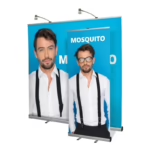
Each of these systems presents graphics, but they meet different needs. A lightbox draws attention with light. A classic fabric wall creates a large backdrop without needing power. A roll-up is useful when you need a simple, vertical display that takes up little space.
| Solution | When to choose them? | What to remember? |
|---|---|---|
| An advertising lightbox | When you want a backlit graphic, visibility from the aisle and a striking backdrop. | Needs power. You have to plan cables and transport of the structure. |
| Fabric wall | When you need a large graphic area without internal lighting. | The effect depends on the light available at the venue or extra lamps. |
| Roll-up | When you present a short message in a limited space. | It has a smaller area and usually doesn't replace a full stand backdrop. |
You don't have to stick to one solution. A lightbox can form the main wall, while a roll-up points to the entrance to the room. A counter in front of a backlit backdrop gives space for conversations and materials. The choice of elements should follow the stand's function, not the number of displays available.
How do you choose the right advertising lightbox?
Define the place and purpose of the display
Start by answering three questions: where will the system stand, from what distance will it be viewed and what should it communicate? A small registration point needs a different solution from an open stand visible from several aisles.
Measure the space available. Include not only the wall width but also walkways, the counter, furniture and room for the team. Also check the maximum build height set by the event organiser.
Decide whether the graphic should be visible from one side or two
A single-sided system can stand against a wall or form a stand backdrop. The double-sided variant makes sense in open space where people pass on both sides of the display. There's no point paying for a second graphic surface if it will always be covered.
Consider how often it will be transported
If you take part in many events, check how it packs, the number of parts and how it folds. Space in the car and the option to store the system between jobs also matter.
Before each trip, check that the structure is complete and inspect the cables and the graphic. That way you won't discover something missing only when setting up the display.
Check whether it can be extended
Modularity is useful if you use a small stand one time and have a larger area another time. Ask whether the chosen system can be combined with extra modules and in which configurations it can work.
How do you prepare a graphic design for a lightbox?
A design for backlighting should take into account the specifics of the particular system and the print house's requirements. Don't prepare the file based only on the size of the visible area. You may need bleed, a suitable safe area and extra material for fixing.
- Ask for the template for the chosen model and size.
- Place the logo and important content away from the edges.
- Limit the number of messages.
- Use text that is legible from the right distance for the location.
- Check photo quality before sending the file.
- Don't judge colours only on a computer screen.
The customer supplies Maxi Expo with their own print-ready graphic design. It must be prepared according to the specification received before production starts. A lightbox alone won't fix an overloaded composition. Backlighting makes both good and poorly planned elements more visible.
The most common mistakes when choosing and using a lightbox
- Too much text. Someone walking down the aisle won't read a long description of the offer.
- No power plan. The system is placed far from a socket and the cable runs across the walkway.
- Wrong graphic format. The print doesn't fit the profile or doesn't tension properly.
- Ignoring transport conditions. The structure fits on the stand, but the space needed to transport it wasn't considered.
- Choosing without analysing the stand layout. The lightbox blocks the entrance, limits the meeting space or isn't visible from the main walkway.
- Packing a damp or dirty graphic. This can spoil the look of the material next time it's used.
Lightbox projects with Maxi Expo
For 12 years Maxi Expo has supplied display, exhibition and advertising systems to customers across Poland. The range includes LED systems, fabric walls, roll-ups, modular stands, counters, flags, stands and accessories.
Long-standing cooperation with large-format print houses lets us cut the standard time to prepare a printed product to 2–5 working days. The exact scope and date depend on the chosen system, availability and the correctness of the file supplied. The finished product can be delivered by transport.
If you are planning a larger display, take into account how the system is assembled and the resources needed on site.
FAQ: advertising lightbox
Does an advertising lightbox need a constant power connection?
Yes. The LED backlighting works when the system is connected to a suitable power source. Socket access and cable routing need to be planned before setting up the display.
Can the graphic in a lightbox be replaced?
In systems with a replaceable fabric graphic you can order a new print and use the same structure. The graphic must be prepared exactly for the lightbox model and size.
Is a lightbox only suitable for trade shows?
No. You can also use it at a conference, a corporate event, in a showroom, a reception or a point of sale. What counts is the space available, power and the purpose of the message.
Can several lightboxes be combined?
Selected modular systems let you create larger layouts. Possible configurations depend on the specific product's design, so they should be agreed before ordering.
Can a lightbox be transported between events?
Mobile display systems are designed for repeated use and transport. Before choosing, check how it packs, its transport dimensions and the number of parts.
Summary
An advertising lightbox is a good choice when you want to use a backlit graphic as a backdrop, signage or part of a stand. It works at trade shows, conferences, in showrooms and at points of sale. When choosing, pay attention to the dimensions, number of sides, assembly method, power, transport and whether the graphic can be replaced.
Not sure whether you need a single LED wall, a compact lightbox or a modular system? Contact Maxi Expo. We'll help you choose a solution for the type of event, the layout of the space, how often you travel and your budget.