




Modular exhibition stands for companies – a practical guide
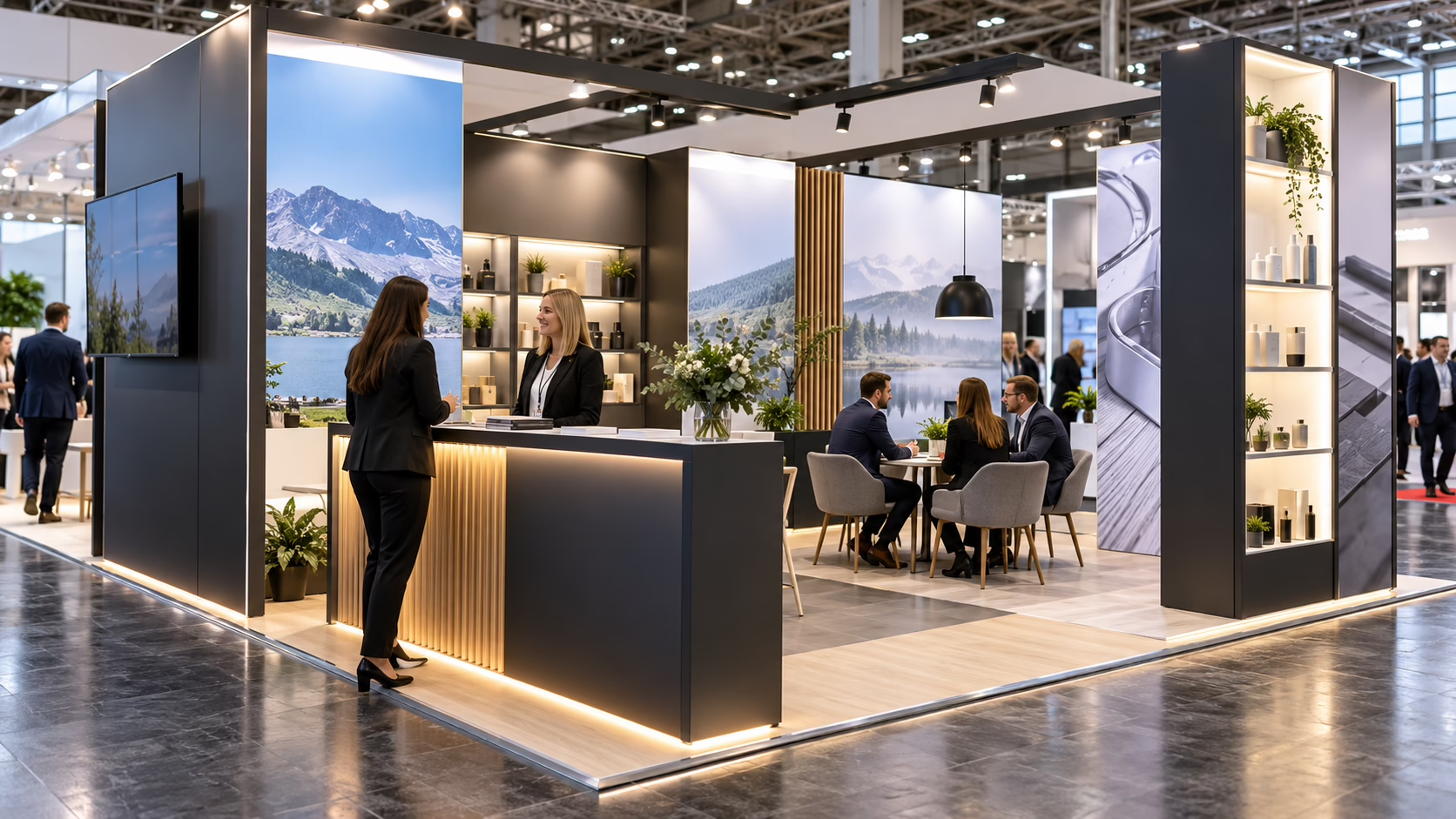
Modular exhibition stands let you build a consistent brand space without making a new structure before every event. You can use the same system at trade shows, conferences, congresses or corporate events. You change the layout, graphics or equipment and adapt the stand to the next space.
This works both for companies that exhibit several times a year and for marketing teams that handle many events. The key, though, is choosing the right structure. It's not only about floor area, but also the stand location, how you hold conversations and the range of products you present.
What are modular exhibition stands?
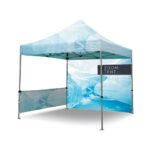
A modular stand consists of repeatable structural elements that can be combined into different configurations. The system can form walls, corners, a back room, graphic areas and service points. It is complemented by counters, lighting, brochure stands and other accessories.
The most important feature is that the structure can be reused. When a company gets a different exhibition space, the modules can be arranged in a new layout. The scope of changes depends on the chosen system and the number of elements available.
Modular display systems don't mean one fixed look. The character of the build comes mainly from the graphics. They can show the brand identity, the offer, product photos or one strong message visible from the aisle.
When is a modular stand build a good choice?
Company stands should match a specific plan for taking part in an event. A brand collecting leads needs a different space from a manufacturer running equipment demos.
Consider a modular stand if:
- you take part in several trade shows or conferences a year,
- your exhibition space changes between events,
- you want to change graphics periodically without replacing the whole structure,
- you need a solution that can be transported and stored,
- you want a consistent brand look at different events,
- you plan to extend the set with more elements.
Mobile exhibition stands are also useful at your own conferences. The structure can form a registration area, a stage backdrop, a consultation point or a space for an event partner.
How do I choose a stand for my trade show space?
Floor area alone isn't enough to choose a build. Check how many sides of the stand are open and where the traffic will flow. A corner stand needs a different layout from a space open only at the front. An island, on the other hand, should communicate the brand from several directions.
Small areas
On a smaller stand every element should have a defined function. The wall carries the main message. The counter creates a conversation point and lets you store materials. Lighting improves the visibility of the graphics.
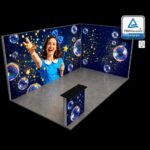
An example of a complete configuration is the Fastframe™ 6 m² exhibition stand with walls, a counter, fabric graphics and lighting. For a slightly larger space you can consider the Fastframe™ 9 m² stand.
Medium and larger areas
A larger area lets you create zones. You can plan an open part for first contact, a presentation station and a quieter place for conversations. A back room for packaging, materials and the team's belongings is also useful.
For such spaces, options include the Vector 12 m² exhibition stand, Fastframe™ 18 m² and Vector 24 m². Every configuration should be checked against the hall plan and the organiser's rules.
Comparison of exhibition stand layouts
| Layout | Main feature | What to watch out for |
|---|---|---|
| In-line | Entrance from the front | The message must be legible from the main aisle |
| Corner | Access from two sides | Don't block the corner with tall equipment |
| Peninsula | Open on three sides | Plan branding visible from several directions |
| Island | Access from every side | Place service points so they don't block walkways |
How do you plan a functional exhibition build?
Start with the goal, not the look. If you want to collect leads, you need an easily accessible counter and room for a short conversation. If you're showing a product, give it a central, well-lit zone. For sales meetings, plan a space where people won't be standing in the walkway.
Prepare a simple plan covering:
- the entrances to the stand,
- the main point visible from the aisle,
- the team's workspace,
- the presentation or meeting zone,
- storage for materials and packaging,
- access to the elements needed during the event.
Don't fill the whole area with furniture. Even striking, modern exhibition stands lose their functionality when visitors can't walk in freely, stop and talk.
The structure layout is only part of the job. If you want to improve how your team works and use communication before the event, also see how to attract customers to an exhibition stand.
Stand equipment – what do you really need?
Stand equipment should support how you serve visitors. Lots of extras don't always improve the result. It's often better to choose a few elements with clear functions.
Counter
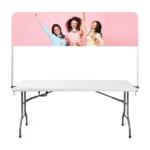
The counter marks the point of contact, holds materials and helps organise the work. But don't place it so it forms a barrier at the entrance. With a wide front it can go at the side or further back.
Walls and fabric graphics
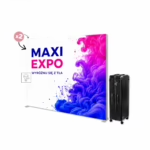
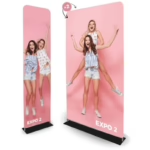
The wall is the main communication surface. Design it so the logo and key information are legible from further away too. If you need a stand-alone backdrop for a smaller display, see the available display walls.
Where the graphic is viewed from also matters. For a structure visible from the back, the guide single- or double-sided fabric wall.
Lighting
Light helps highlight the graphics and the products on display. Plan its placement together with the structure. That way you reduce the risk of key messages being in shadow.
Flags, roll-ups and stands
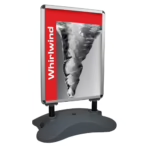
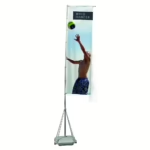
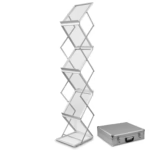
A flag can point to the stand from further away in the hall or mark the entrance to an event. A roll-up works as an extra message carrier, for example with the presentation schedule. Stands keep catalogues and leaflets in order.
Before choosing a flag model, see how to choose an advertising flag for the location and how it will be used.
How do you prepare graphics for a modular stand?
The graphic should get one main message across in a few seconds. Someone walking down the aisle won't read a long description. Show the logo, a short message and one strong visual. The team or printed materials can provide the details of the offer.
Before starting the design, ask for the specification for the chosen system. Take the format, safe areas, bleed and joint positions into account. Important content shouldn't fall on an edge or behind the counter.
The customer normally supplies Maxi Expo with their own finished, print-ready design. Design work by the company is only possible in individual, specially agreed cases. So it's best to discuss the files with your designer before the final export.
Buying a stand step by step
- Gather information from the organiser. You need the dimensions, stand type, hall plan and technical guidelines.
- Define your goal. Decide whether the priority is conversations, product presentation, lead collection or serving attendees.
- Choose the structure. Match the system to the floor area, the number of events and the planned configurations.
- Decide on equipment. Choose the counter, lighting, stands, flags and any other elements you need.
- Prepare the graphics. Supply files that match the chosen product's specification.
- Plan transport and assembly. Decide who receives the delivery, stores the set and is responsible for setting it up in the hall.
Maxi Expo handles product preparation, large-format printing and transport. Thanks to long-standing cooperation with large-format print houses, the standard lead time is 2 to 5 working days. The final date depends on the scope of the order and the readiness of correctly prepared files.
On-site assembly is offered only for smaller projects, such as a single wall or counter. The service doesn't cover large exhibition builds. For a larger stand, assembly and on-site work must be planned separately.
FAQ – modular exhibition stands
Can one modular stand be used on different floor areas?
Yes, if the chosen system and set of elements allow different configurations. Each new layout must always be matched to the floor area and number of open sides.
Can the graphics be changed without buying a new structure?
In many systems this is possible. The new graphic must be prepared for the specific model and stand configuration.
Is a modular stand only suitable for trade shows?
No. Event stands can be used at conferences, congresses, product launches and company-run events.
Who prepares the print-ready graphic design?
The customer normally supplies the finished design. Maxi Expo prepares the product and the print. Graphic design is only available in individually agreed cases.
Does Maxi Expo assemble large exhibition builds?
No. On-site assembly is only available for smaller projects, such as a counter or a single wall. It doesn't cover large stands.
Summary
Modular exhibition stands let you reuse the structure and change its layout between events. A good choice starts with analysing the space, your goals for the show and your team's needs. Only then do you choose the walls, counter, lighting and other equipment.
For 12 years Maxi Expo has supplied display, exhibition and advertising systems across Poland. If you are planning a stand for a trade show, conference or corporate event, contact us. We'll help you choose the structure and display elements for the available space, how you will use it and your budget.